
I recently wrote about Clay securing a $100m investment in its business and how this phenomenal new business was changing the sales landscape.
When once marketing and sales drives growth, GTM Engineering now leads. Its explosive rise isn’t a trend, it’s a shift in mindset, structure, and results.
Why traditional GTM is losing momentum
• Old GTM tactics feel stale. Sales plays from the 2010s or recycled today get copied fast, losing edge in weeks.
• Teams operate in siloes, with different data, tools, and manual upkeep. This slows execution and dampens creativity.
• Manual research, spreadsheets, enrichment routines absorb time leaders should use to test new ideas or iterate fast.
These weaknesses create diminishing return on campaigns and reduced business velocity.
GTM Engineering: A Discipline, Not a Tactic
GTM engineering treats revenue growth like product development. It unites engineering, marketing, sales, and success around systems, not campaigns. It replaces ad‑hoc plays with pipelines and loops that scale.
Digital Clarity describes it well: building outreach systems, enriched data flows, and AI‑driven personalization to generate qualified pipeline at scale. What once took manual work now runs as engineered pipelines.
Clay & the GTM IDE
Platforms like Clay centralize over 150 GTM data sources, CRM connectors, sequencers, and AI tools into a single GTM IDE. That architecture lets teams build internal systems for personalized outreach, enrichment, and signal detection, without relying on dozens of point tools.
AI now democratizes engineering. Teams with modest budgets can build systems in-house, clean data foundations, fast iteration, automated outreach. That cuts grunt work, reduces redundancy, and speeds up testing cycles.
Growth loops meet GTM engineering
Growth loops shift growth models from linear funnels to self‑reinforcing systems. Reggie James unpacks them: viral loops, usage‑based loops, referral loops, collaboration loops, user‑generated content loops and emergent AI‑driven variant.
These loops work best when GTM engineering systems feed them:
• Data pipelines drive personalization in viral/agentic loops. • Outreach workflows surface referral triggers. • AI‑generated content becomes loopable shareables.
Clay’s custom signal workflow turns data points into outreach triggers.
Every email, call, or action becomes part of a compound growth system.
GTM engineering in motion: metrics & reach
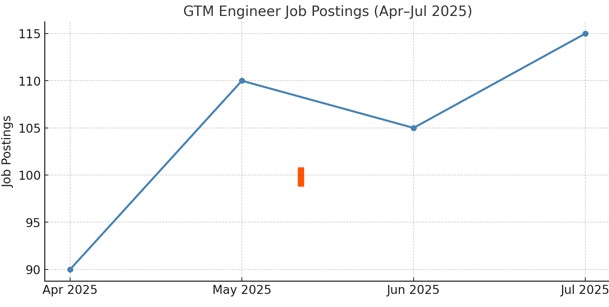
• Over 400 GTM Engineer jobs posted globally in last 4½ months
• 108+ agencies adopting GTME and building multimillion‑dollar run‑rate businesses
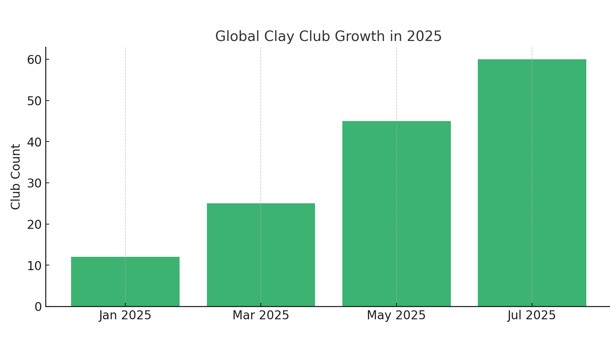
• 60 Clay Clubs in 29 countries training this new discipline
• More than $50M generated for 150+ GTM data partners in 2025
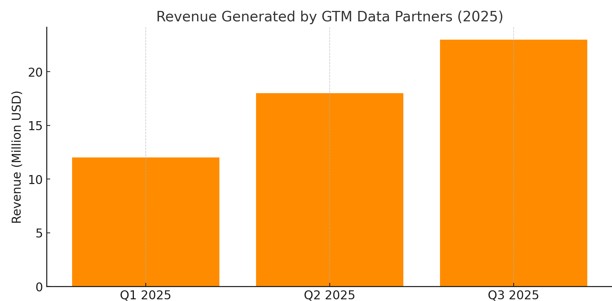
These numbers reflect something bigger: GTM engineering delivers cleaner data, lower spam volume, higher response rates, and more humanized experiences at scale.
Why Now Is the Moment
1. Buyers are smarter, more autonomous
Over 70% of B2B journeys now happen in the “dark funnel.” Buyer’s research, compare, and shortlist long before engaging sales.
GTM teams must unify data, insights, and outreach to meet them where they are.
2. AI enables scale + personalisation
AI and analytics now enable true hyper‑personalization. Teams can predict intent, automate messaging, and trigger outreach at scale—all within engineered systems
3. Silos Still Stall Growth
When marketing, sales, and success operate separately, revenue ops suffers. GTM engineering tears down these silos, aligning teams around shared metrics and automated flows arisegtm.com.
Strategic Blueprint for GTM Engineering
1. Build a Unified Data Foundation
Integrate CRM, enrichment, intent, and interaction signals into one source of truth. Automate scoring, deduplication, and hygiene. Ensure sales trusts the pipeline graph.digitalarisegtm.com.
2. Design Growth Loops That Leverage AI
Viral, usage‑based, referral, and agentic loops all benefit from GTM systems. Build loops into product and outreach workflows. Use AI‑powered templates, signals, and sharing triggers.
3. Align with Revenue Journey—not campaigns
Shift from counting MQLs to tracking deal velocity, pipeline conversion, and CAC/LTV ratio. Sync sales and marketing around unified KPIs. Bake automation into every stage of the revenue funnel Mediumclaritydigital.agency+1.
4. Iterate Fast
Launch signal‑based workflows. A/B test outreach content, timing, templates, sequences. Optimize loops and data flows. GTM engineering makes iteration built into the system.
A Word on ROI & Leadership Impact
Enterprises that adopt GTM engineering shift from execution mode to strategic leadership. Executives get time to plan, test new growth signals, and run experiments that compound. Teams that once drowned in manual tasks now invest in strategy and innovation graph.digital.
Conclusion
The future belongs to teams that place systems before tactics. GTM engineering isn’t a buzz phrase—it’s a new operating model. It treats revenue like product: measurable, repeatable, scalable. With AI, data pipelines, and loop‑based thinking, impact compounds.
Tech leaders who invest in GTM engineering can expect cleaner data, faster experimentation, and pipeline built to scale. The era of GTM engineering is here—time to build the engine.
Sources & Further Reading
• Reggie James, Growth Loops: Engineering Exponential Growth in the AI Era
• Digital Clarity on building growth systems with Clay
• Paul Sullivan, What is GTM Engineering?